Porcelain Veneers
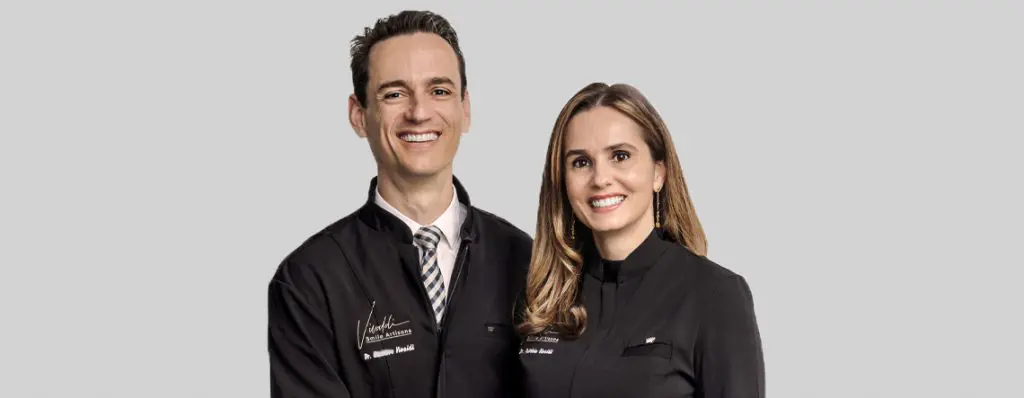
Dr Patricia Vivaldi has a passion for cosmetic dentistry and is committed to transforming smiles through dental veneers, which mimic the shape and colour of your natural teeth, using the best and latest practices and technologies. Come visit our dental clinic in the Sydney CBD to achieve the smile you’ve always dreamed of!

What are porcelain veneers & why do we use them?
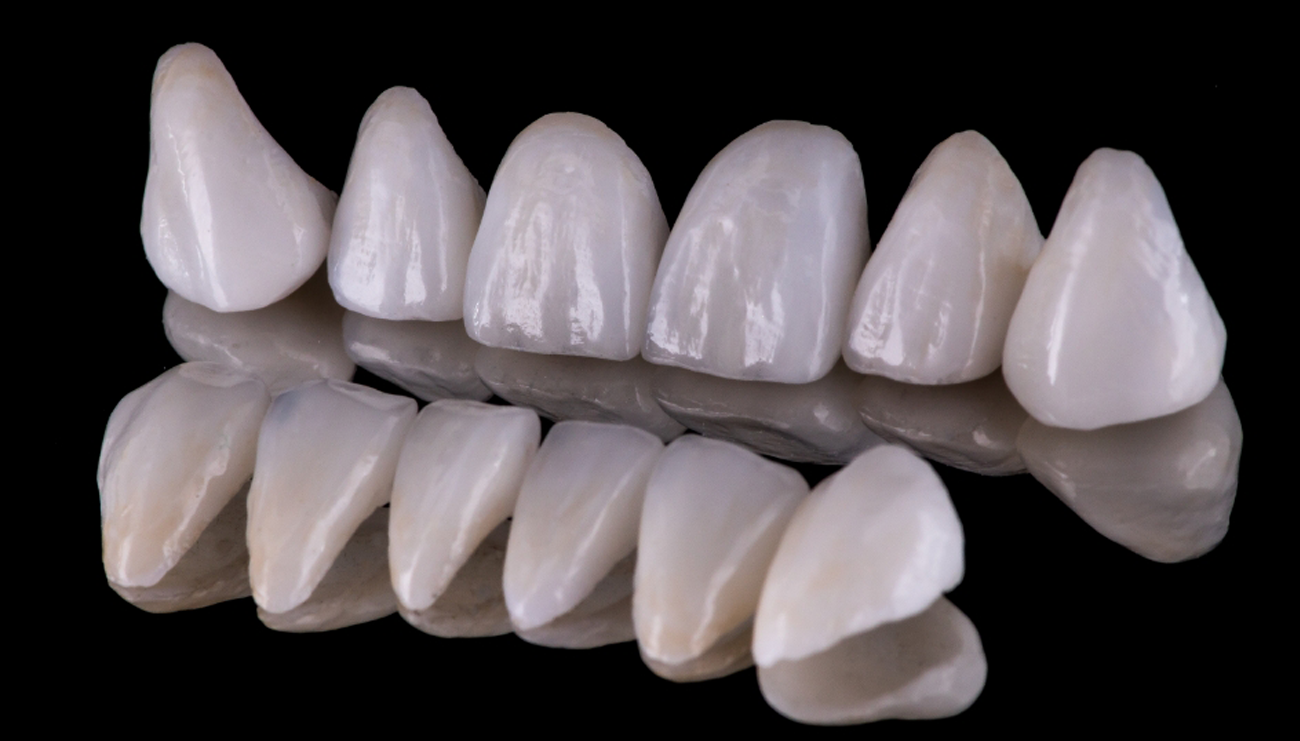
Porcelain veneers or dental veneers are thin shells made of different types of ceramic materials, that are bonded over the visible parts of your teeth. They are used to improve aesthetic issues such as shape, size, colour and alignment of teeth. Veneers can be utilised to modify anything from a single tooth, to up to 10 teeth on each arch.
Porcelain veneers are customised to blend in with your natural teeth, matching their colour and general anatomy. This is to enhance the appearance of your smile in an unnoticeable way, so that the veneers look like an improved version of your own teeth. To learn more, visit our Smile Gallery to see the smiles we have transformed through veneers procedures!
When are porcelain veneers recommended?
Porcelain veneers are a great option for smile enhancements when a strong amterial is required or multiple issues need to be fixed, such as:- Chipped, broken or heavily worn teeth Heavy stains and discolouration that can’t be resolved with whitening
- Greyness caused by root canal treatments and drug treatments (like tetracycline)
- Genetic enamel defects (amelogenesis imperfecta, hypomineralised enamel)
- Heavily restored teeth, where the fillings are noticeable

When are porcelain veneers recommended?
Porcelain veneers are a great option for smile enhancements when a strong amterial is required or multiple issues need to be fixed, such as:- Chipped, broken or heavily worn teeth Heavy stains and discolouration that can’t be resolved with whitening
- Greyness caused by root canal treatments and drug treatments (like tetracycline)
- Genetic enamel defects (amelogenesis imperfecta, hypomineralised enamel)
- Heavily restored teeth, where the fillings are noticeable
How are porcelain veneers made?
The process to create hand-crafted, natural looking porcelain veneers happens in three stages:1. Planning (first appointment)
In Dr Patricia Vivaldi’s opinion, the diagnosis and treatment planning stage is of the upmost importance to achieve the best result for each patient. In this first appointment, at our dental clinic in the Sydney CBD, she will understand all your concerns and expectations, and then present you with options on how to achieve the desired result using dental veneers. We will also discuss the cost of your new porcelain veneers. Once you are happy with the treatment proposed, radiographs, photos and a 3D scan of your teeth will be taken, so a “mock up” of your future smile can be created. This stage is called “smile design”, and it takes into consideration your individual features, such as age, gender, shape of your lips and face, anatomy of your teeth, height of your smile and gums, etc. Dr Patricia’s veneers are curated to suit each patients’ characteristics & personality.
1. Planning (first appointment)
In Dr Patricia Vivaldi’s opinion, the diagnosis and treatment planning stage is of the upmost importance to achieve the best result for each patient. In this first appointment, at our dental clinic in the Sydney CBD, she will understand all your concerns and expectations, and then present you with options on how to achieve the desired result using dental veneers. We will also discuss the cost of your new porcelain veneers. Once you are happy with the treatment proposed, radiographs, photos and a 3D scan of your teeth will be taken, so a “mock up” of your future smile can be created. This stage is called “smile design”, and it takes into consideration your individual features, such as age, gender, shape of your lips and face, anatomy of your teeth, height of your smile and gums, etc. Dr Patricia’s veneers are curated to suit each patients’ characteristics & personality.
2. Smile trial (second appointment)
The second visit of the porcelain veneer process is when the teeth are “prepared” to receive the porcelain shells. In some cases, when only addition is needed, no tooth structure needs to be removed – these are called prep-less veneers.
A second 3D scanning or impression will then be taken to copy the “prepared teeth”, so the definitive veneers can be custom made to fit over them. The Vivaldi Smile Artisans team will take several photos for the porcelain shade selection, according to your natural teeth, so the veneers can match perfectly. If tooth whitening is required, it is always done before this stage.
Veneers can be hand-made (feldspathic veneers) or machine made (lithium disilicate veneers). The choice of material depends on several factors; how much tooth structure is remaining to support the veneers; the amount of discolouration that needs to be masked, and each individual patients’ habits (such as tooth grinding). Dr Patricia Vivaldi will take all these variants into consideration before choosing the ideal material.
3. Cementation (third appointment)
At the final visit, the temporary veneers will be carefully removed and the porcelain veneers tried-in and fitted. During the try-in Dr Patricia Vivaldi will make sure that the fit, colour and design look perfect. Once you are both happy with the look of the veneers, they will be bonded into place. The teeth are then cleaned and etched and have a bonding agent applied to them. This process is also done to the internal surface of the porcelain veneers, in order to create a strong bonding between tooth-porcelain. A tooth-coloured cement is then used and this is cured with UV light. Final adjustments are then made to ensure that the veneers are both functional, comfortable – and of course – look amazing! At the end of the process you will be ready to show off your new smile! 3. Cementation (third appointment)
At the final visit, the temporary veneers will be carefully removed and the porcelain veneers tried-in and fitted. During the try-in Dr Patricia Vivaldi will make sure that the fit, colour and design look perfect. Once you are both happy with the look of the veneers, they will be bonded into place. The teeth are then cleaned and etched and have a bonding agent applied to them. This process is also done to the internal surface of the porcelain veneers, in order to create a strong bonding between tooth-porcelain. A tooth-coloured cement is then used and this is cured with UV light. Final adjustments are then made to ensure that the veneers are both functional, comfortable – and of course – look amazing! At the end of the process you will be ready to show off your new smile!Review
Usually, a review appointment is booked with Dr Patricia Vivaldi two weeks after cementation to reassess, make any adjustments needed and take the final photographs of your new smile.Before & After Treatment
Porcelain Veneers Cost in Sydney
Porcelain veneers at Vivaldi Smile Artisans are around $2,100 per tooth, and composite veneers around $780 per tooth. Our veneers cost guide covers what affects the price and how the two types compare, and our bonding vs veneers guide helps you decide which suits your smile.
Porcelain Veneers Frequent Asked Questions
Porcelain veneers are thin shells of porcelain, custom made to restore and reshape teeth. They are bonded to the front surface of the tooth and matched to the shape and shade of your smile.
Porcelain veneers require removal of some tooth structure in most cases, to create space for the material. The preparation can be very conservative, with porcelain shells as thin as 0.3mm
At Vivaldi Smile Artisans, porcelain veneers are around $2,100 per tooth and composite veneers around $780 per tooth. The total depends on how many teeth are treated. See our veneers cost guide for the full breakdown.
With good care, porcelain veneers often last 10 to 15 years or more. They are highly stain-resistant, and good brushing, flossing and regular check-ups protect the teeth underneath.
Often, yes. Composite bonding ($450 to $600 per tooth) suits minor chips, small gaps and reshaping, and removes no enamel. See our bonding vs veneers guide to compare.